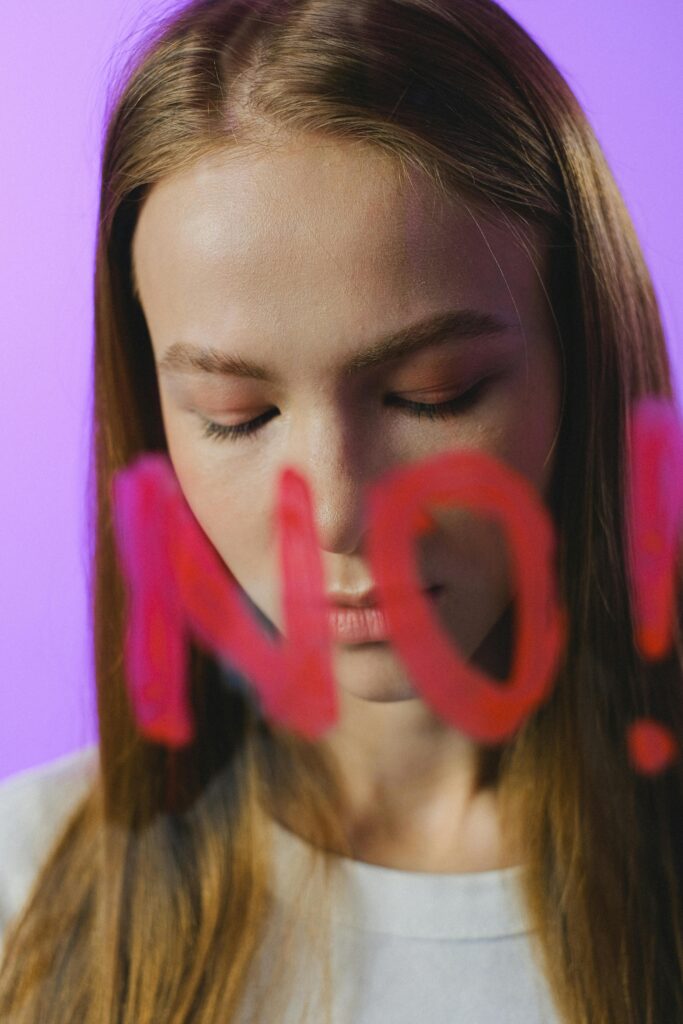
The art of saying No,is an art that we all must learn. But for that we need to first unlearn the habit of saying yes to everything.
When you ask someone how they are, 95% of the time they will answer with some version of “busy”, “good”, or even sometimes, “crazy busy”.
Busy has become a badge of honor, a signifier of success – a humble brag that implies we are important and in demand. But if you really are “too busy”, chances are, you are not saying no enough and art of saying no is what you need.
Many of us struggle to say no, fearing rejection, anger or just the uncertainty of what the other person’s response will be. Our people-pleasing is often rooted in childhood. We might have been raised to be a good girl or boy, praised for being “mummy’s little helper”, or we might not have been given enough attention, and so sought it by pleasing others, even at the expense of ourselves. We can get so used to saying yes and pleasing others that we don’t even know what we want, or what our needs are. But if your life is so tightly packed with other people’s requests that you don’t have time for what really matters to you – or worse, your mental health is at risk – it is time to make a change.
Learning the art of saying no is realizing that you are valuable and choosing your own opinion about yourself over others.
I have learned that if you live your life depending on other people’s approval you will never feel free and truly happy.
If you depend on other people’s approval, what you are basically saying is “Their opinion of me is more important than my opinion about myself.”
If your opinion of yourself is actually quite low, remember that:
Your problems do not define you.
It’s okay to make mistakes—nobody is perfect, and everybody does things that they regret; this is what makes us human.
What makes a person great is not their looks or achievements, but their willingness to love others, be humble, and grow as a person.
You are unique, valuable, and important. No one else in this world can offer what you can.
In his book The Power Of No, entrepreneur and author James Altucher writes: “When you say yes to something you don’t want to do, here is the result: you hate what you are doing, you resent the person who asked you, and you hurt yourself.” When it is coming from a place of subtle manipulation or even resentment, can saying yes when you mean no ever be a good thing?
Think about the anguish, stress, and resentment that saying yes has caused you. Wouldn’t it be so much easier and straightforward to just say no in the first place?
I remember this one time that I said yes to something and then later felt so bad about it that I ended up lying my way out of it. I still feel bad that I lied. But, at that time I didn’t know the art of saying no.
My boss called me one day and was asked if I could work the following Saturday. As usual, I blurted out a polite “Yes, of course, that’s no problem at all.” I actually had plans with my friends, which I was really looking forward to.
Later, I found myself feeling absolutely terrible about having said yes and I wished that I had just had the guts to say no from the beginning.
Dreading the idea of having to work that day, I called my boss back with the best excuse I could think of. I told her that I had completely forgotten that it was my dad’s birthday that Saturday and that we had a family get-together (which was certainly not the case).
Looking back, I realize that it really isn’t worth it to say yes when you don’t want to. I have a right to say no and shouldn’t be afraid of letting other people down at the cost of my own happiness.
To start reclaiming your time and your mental wellbeing by saying no more, tune into what it is that you really want. Instead of saying yes on impulse, get into the habit of asking yourself: “Am I agreeing to this for me?” Start with small things, such as when you are offered a drink at the hairdresser’s or if someone asks you for an insignificant favor. Learn to recognize what saying yes and no feels like in your body. Yes might feel expansive, while no might feel contracting; learn to pay attention.
Helpful Tips for learning the art of saying No
Be direct, such as “no, I can’t” or “no, I don’t want to.”
Don’t apologize and give all sorts of reasons.
Don’t lie. Lying will most likely lead to guilt—and remember, this is what you are trying to avoid feeling.
Remember that it is better to say no now than be resentful later.
Be polite, for example, saying, “Thanks for asking.”
Practice saying no. Imagine a scenario and then practice saying no either by yourself or with a friend. This will get you feeling a lot more comfortable with saying no.
Don’t say, “I’ll think about it” if you don’t want to do it. This will just prolong the situation and make you feel even more stressed.
Remember that your self-worth does not depend on how much you do for other people.
If you are still struggling to say no, bear in mind what the billionaire businessman Warren Buffet famously said: “Successful people say no to almost everything.” Saying no allows you to say yes to what is important to you. It allows you to be a better person because when you say yes, it comes from a good place, not from resentment or fear. It creates space for what matters most to you, rather than drowning in busyness, like most of us are.
Hopefully this article helped you in learning the art of saying no. In case you want to delve deeper in the understanding of this art contact me by filling out the form available on http://www.lifecoachruchihkaalraa.com